fbpx

Local writer Claire Casey writes about the tragic tale of Marjorie Bruce – daughter of the famous King Robert the Bruce, hero of Scotland’s Wars of Independence.

Another legend that has become associated with Paisley Abbey is the death of Princess Marjorie Bruce, who was the daughter of Robert the Bruce.

In around the time of 1315, after her long imprisonment by the English, she had married Walter the Steward, the High Steward of Scotland and a descendent of Fitz Alan, the monastery’s founder. As the legend goes, while she was heavily pregnant Marjorie had been out riding along what is now Renfrew Road.

For some reason, her horse had spooked and had thrown her to the ground. This fall is said to have caused Marjorie a fatal injury. The story continues that she was rushed to the infirmary at the monastery, where the monks saved the baby. It has been claimed that they achieved that through the first ever caesarean section to be carried out in Scotland. Even though they were supposedly able to save the baby, the monks were unable to save Marjorie and she died not long after the birth of her son, Robert Stewart.

In the legend, it has been claimed that during the caesarean, the skin to the side of the baby’s eye was nicked by the knife that had been used to carry out the crude operation. It was this cut that some believe lead to Robert’s eye being permanently disfiguring.

After David II had died without issue, Robert Stewart, the son of Marjory Bruce, went on to become the first Scottish king of the Stewart dynasty. The story of his birth has been commemorated with a cairn, which stands on the Renfrew Road, close to the Abbotsinch Retail Park.

The cairn had replaced a pillar that may have commemorated a victory against the army of Somerland in 1164. The pillar mistakenly became known as Queen Bleary’s cross, which leads to the belief that was where Marjorie had fallen, rather than it being the marker of a battlefield. It has also been suggested by Sylvia Clark that the cairn that stands on Renfrew Road, and which is meant to mark the spot where Marjory fell, owes more to local myth making than to actual history. Therefore, it has nothing to do with Marjory’s death.

Despite this memorial to Marjory, the story of her death and the birth of Robert II within the monastery’s infirmary have been called into question in recent years. It has been suggested that it seems more likely that Marjorie died while giving birth in the Stewart Castle in Renfrew, rather than in Paisley’s monastic infirmary.

Within the Abbey, there is a feature that is commonly known as Princess Marjory’s Tomb. It can be found in the Abbey’s choir. It has been constructed out of ornate, carved stone and is topped with a stone effigy of a young woman. In recent years, it has been proven to be nothing more than a memorial at best. It seems that one of the Abbey’s former ministers had managed to construct this so-called tomb with some of the remaining fragments of the Abbey’s rude screen, which he used to form the tomb’s base.

It is believed that the effigy that sites on top of the tomb was taken from a burial within the graveyard that surrounded the Abbey. Therefore, the figure that forms the effigy has nothing to do with Marjorie but is instead the memorial of a nameless woman who had been interned somewhere in the Abbey’s grounds. At one point, the tomb itself was opened and found to contain no human remains, proving beyond all doubt that it is not a tomb.

Even though doubt has been cast on Marjory dying in childbirth within the walls of Paisley’s abbey, there is a grain of true in the story. It is known that Robert II did seem to have something wrong with one of his eyes, but the actual causes for what was wrong with his eye have remained unclear. It is possible that the eye deformity that he suffered from may have been sustained through a war injury, or through some sort of eye infection.

Even though Marjorie may not have died within the walls of the monastery’s infirmary, it is known that some of the High Stewards were buried within the grounds of the monastery. It has been suggested that they were buried within the vault of the Infirmary Chapel, a theory that is based on the intriguing comments made by a Bishop Pococke when he visited the Abbey in 1760.

 

Related Links

We all love a random fact, don’t we? So, let’s take a look at some quirky things about Paisley which you may, or may not, have already known…

Paisley is home to a rich heritage and a vast range of striking architecture which makes for a fascinating story around every corner of the town.

You might be familiar with the town’s famous names, such as Paolo Nutini, Gerrard Butler, David Tennant, John Byrne or Pam Hogg – but did you know that the town is the birthplace of a number of ground-breaking inventions? Or that you can even see an Alien at Paisley Abbey?

Find out all about these fun facts and more below…

Architecture galore

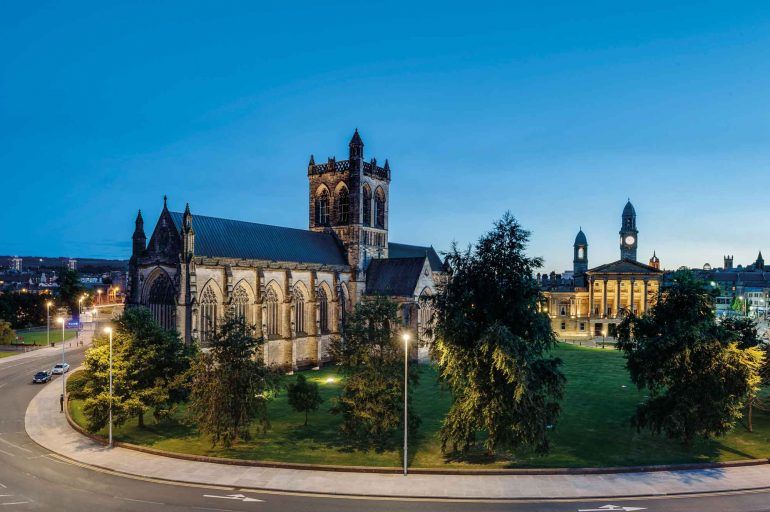
Paisley Abbey and Town Hall

Did you know that Paisley town centre has 110 listed buildings? That’s a higher concentration than anywhere in Scotland outside of Edinburgh. It’s definitely worth paying a visit to the historic Paisley Abbey, the Anchor Mill and many more!

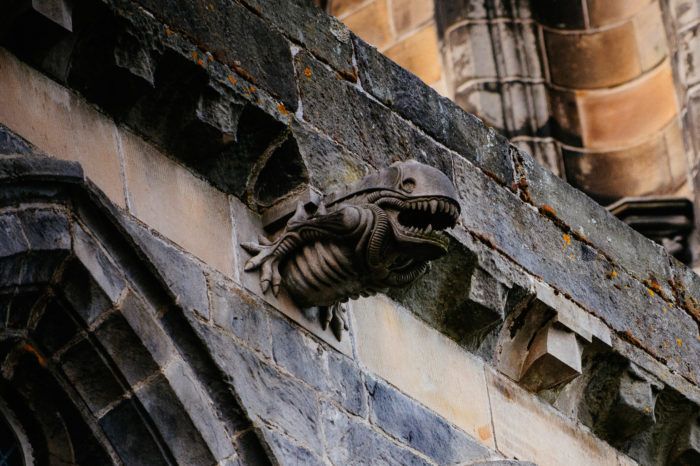
An alien gargoyle

Speaking of Paisley Abbey, have you seen the alien gargoyle among the intricate statues outside the striking building? The design is believed to have been carved by a rogue sci-fi loving stonemason in the early 1990s in ode to the 1979 cult film.

The threads that bind us

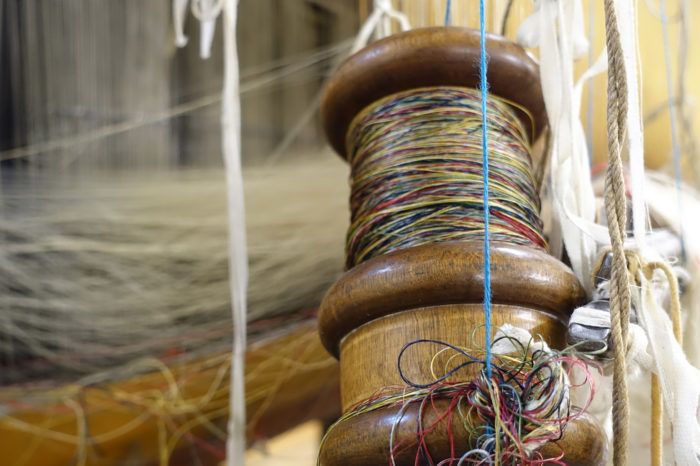
Close up of an old spool of thread

Did you know that at one point a Paisley-based company was responsible for making 90 per cent of the world’s sewing thread? Paisley’s thread exports and patterned shawls saw the town establish itself as a global manufacturing and textile powerhouse through local business J&P Coats Ltd.

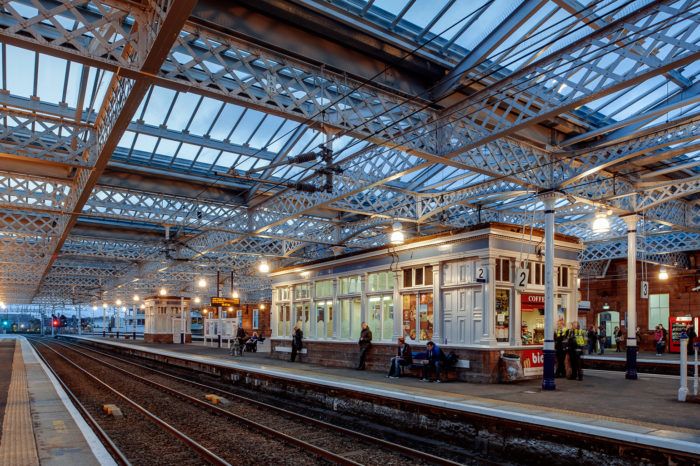
All aboard!

To many people’s surprise, Paisley Gilmour Street is actually the fourth-busiest station in Scotland with more than five million passengers per year. This is more than Haymarket in Edinburgh, Aberdeen or Dundee!

Bringing whisky to the world

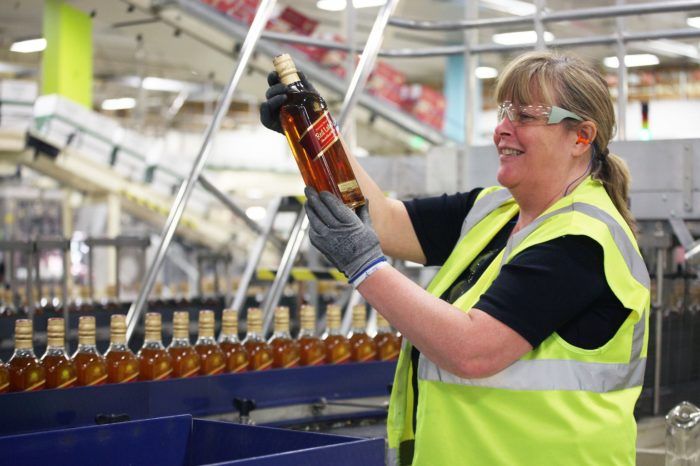
Did you know around 30 per cent of the world’s Scotch is bottled in Renfrewshire? World-famous drinks manufacturer Diageo’s packaging plant at Shieldhall bottles more than 25 million cases of Scotch whisky annually.

Fancy a game?

Did you know the world’s first commercial five-a-side football pitch centre opened in Paisley? Keith Rogers opened the pitches at the town’s Anchor recreational centre in 1987 under the name Pitz.

First European trophy

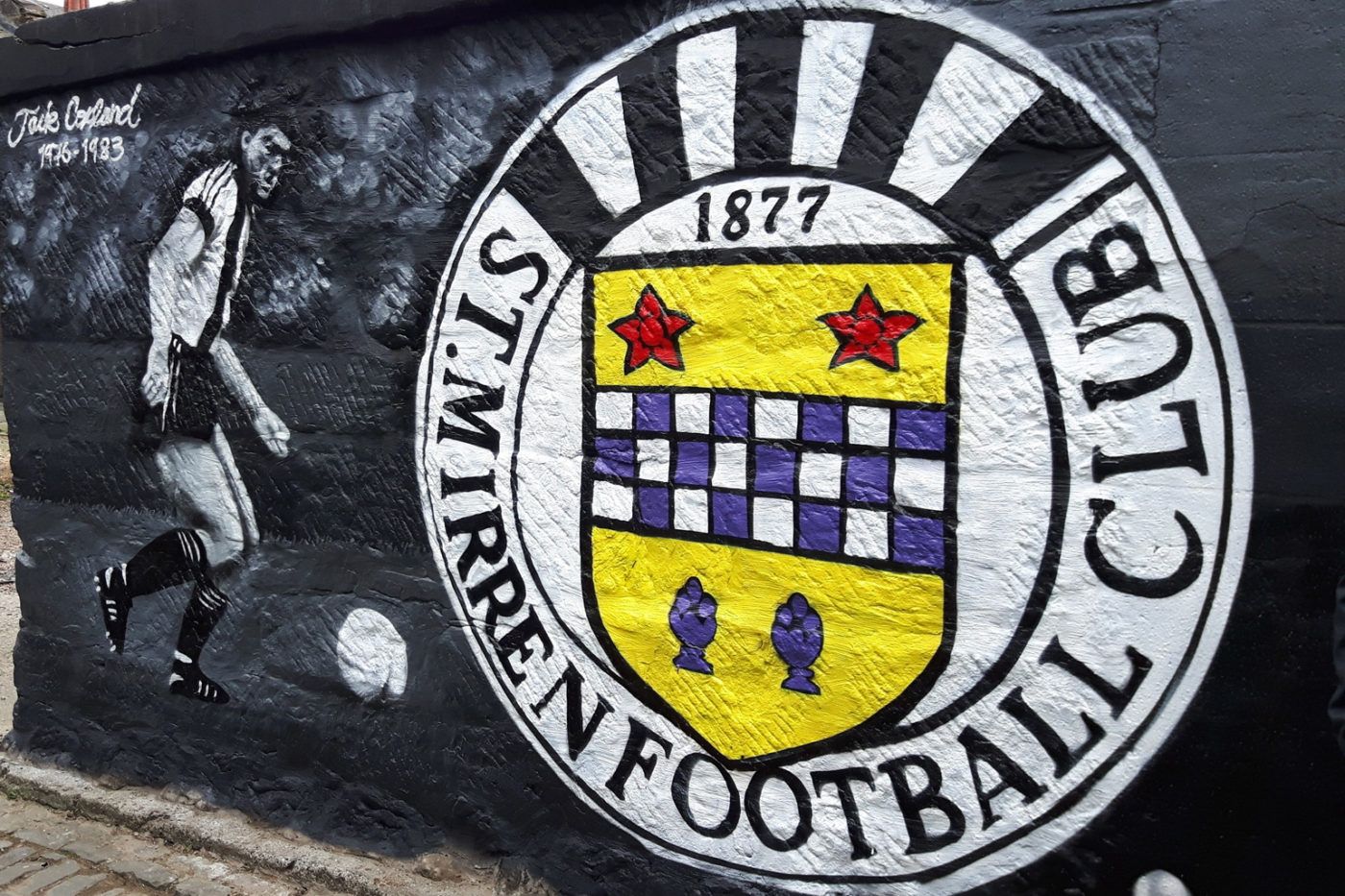
It’d be rude to talk about football in Paisley without mentioning St Mirren – so, did you know that the Buddies were the first Scottish team to win a European trophy? In 1922, St Mirren were invited to play in a tournament to mark the opening of Barcelona’s new stadium, Les Corts. The Buddies won it and brought home the Barcelona Cup.

Substitute me for him

While he may be remembered mostly for THAT goal against Holland at the 1978 World Cup (see video above), Archie Gemmill was also famous for being the first official substitute in Scottish domestic football. Gemmill replaced St Mirren’s Jim Clunie in a League Cup tie against Clyde at Shawfield on August 13, 1966 – the first time new substituting rules for competitive games was in operation.

CHIP and PIN

You might use it almost every day, but did you know the CHIP and PIN system was invented by a Paisley Buddie? James Goodfellow OBE created the first Personal Identification Number (PIN) and Automatic Teller Machine (ATM) technology in 1966.

Paisley punks

The Bungalow Musical

For a time The Bungalow Bar on Renfrew Road was the main punk venue in the Glasgow area as punk bands were once banned in Glasgow. Top acts to play the venue included: The Rezillos, The Skids, The Clash, The Jam, Orange Juice, Echo and the Bunnymen and Souxsie and the Banshees.

I love Paisley because you must have the only Abbey worldwide with an ’Alien’ gargoyle! #WhyILovePaisley

@JPBreslin
What's Our Story?

“My name is Amanda Levete. I am the principal for A_LA and we’re extraordinarily privileged to have won the competition to re-imagine Paisley Museum.

To really sum up for me what this project is about…it’s about being brave, being radical and being innovative. To really re-imagine Paisley Museum and to tell the untold story of Paisley.

When I read the brief for the project, I was astounded. It was one of the most radical briefs I’ve ever read.

And what fascinates me is that Paisley is a town, it’s not even a city, but the ambition of this project is greater than many national museums. And I live ambition!

What’s radical about the brief is, almost in a sense what’s radical about Paisley.

Paisley has a very radical past. It has a proud industrial history. It has a history of innovation.

It’s a community with great resilience. It’s as though radicalism is built into the community of Paisley. And I think it’s our task as architects to try and express that. Through the narrative that runs through the museum, but also through the design and through the way that we negotiate the relationship between the High Street and the museum.”

Amanda Levete is a a former winner of UK architecture’s top honour, the RIBA Stirling Prize.

Paisley Museum is the first Scottish commission for the London-based practice A_LA, who have designed landmark projects including the Victoria & Albert Museum Exhibition Road Quarter – which this year won the prestigious RIBA London Building of the Year 2018. They are also shortlisted for the competition to redesign the visitor experience at Paris’s iconic Eiffel Tower.

Current AL_A projects include the revitalisation of the historic Galeries Lafayette department store in Paris; a new centre for the cancer care charity Maggie’s in Southampton; and two new buildings for Wadham College at the University of Oxford. Completed projects include Central Embassy, a 1.5m sq ft luxury shopping mall and hotel in Bangkok, and Sky TV’s new London media campus.


This is one of the most radical briefs I have read – it triggered in us a desire to tell the untold history of Paisley and search for a narrative thread that will drive the design. The project is bigger than the building itself and I am excited to re-imagine the relationship between the street and museum. This is not only about finding the way to best show the museum’s collection - it’s also about showing the world how an ambitious cultural project can have a profound impact on a community and its identity.

Amanda Levete
Architect
AL_A

If you’ve already heard of Paisley’s twin town Fürth in Germany, then you might want to know a few funny and interesting facts about this place, just as our 50th anniversary year approaches in 2019.


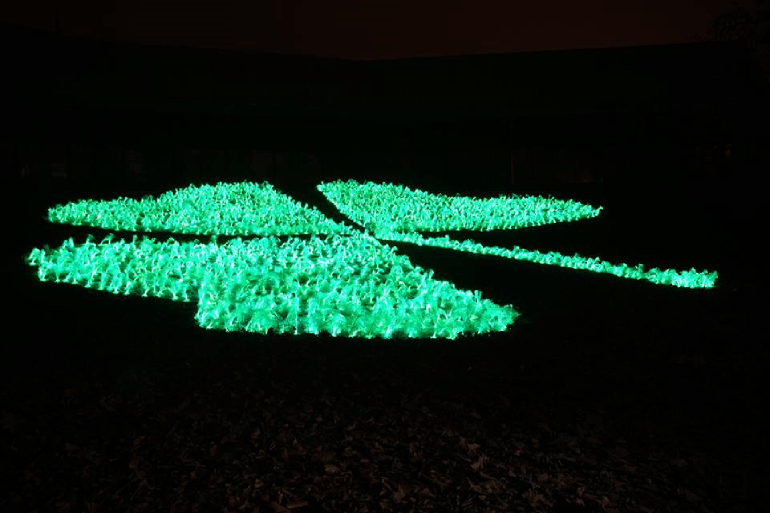
1. Fürth is also called “the city of the cloverleaf”

Photo owned by Norbert Mittelsdorf

There’s a few explanations behind this name. Some say the trefoil represents the three authorities which ruled the town between 1303 and 1314; the Bishopric of Bamberg, the Principality of Ansbach and the City of Nuremberg. Others claim that it’s a symbol for the peaceful cohabitation of the three religious groups Protestants, Catholics and Jews. Due to the clerical domination its origins could also lie in the trinity of God. However, it became quite famous through our local football team SpVgg Gruether Fürth, who have worn the trefoil emblem since they were established in 1903. 


2. Playmobil originates in Fürth’s rural dirstrict

My guess is many of you loved playing with Playmobil toys as a child. The company that produces these toys is headquarted in Zirndorf, which is part of the region district of Fürth.

What’s more, Fürth is located in the Nuremberg Metropolitan Region – one of the strongest metropolitan areas in Germany which is home to big companies like the Adidas Group, Puma SE and Siemens.


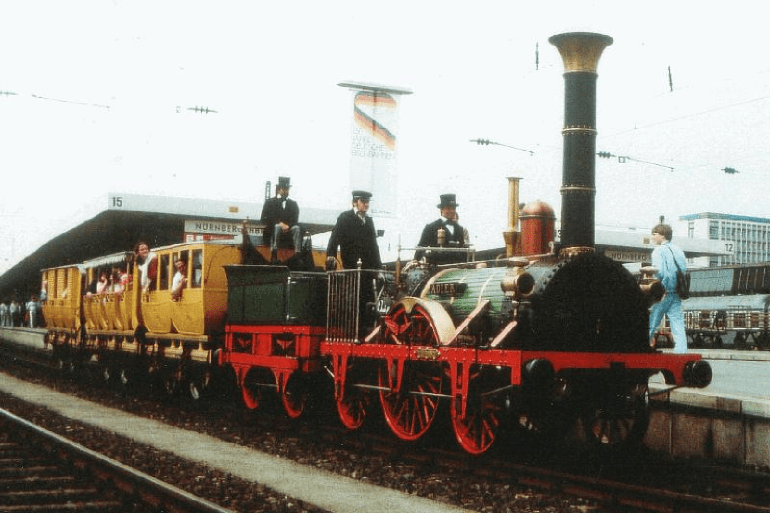
3. Germany’s first railway track was built between Nuremberg and Fürth

In May 1835 the customized steam locomotive Adler (German for “Eagle”) was ordered from Stephenson’s locomotive works in Newcastle upon Tyne. In November 1835 the first run was accomplished with the help of a British engineer, who had travelled with the locomotive from Fürth to Nuremberg. In 1972, Germany’s newest metro started operating between Fürth and Nuremberg. It is partly driverless and fully automatic since 2008.  Fürth really benefits from being linked with the large city of Nuremberg, because it would never be able to afford a subway on its own.


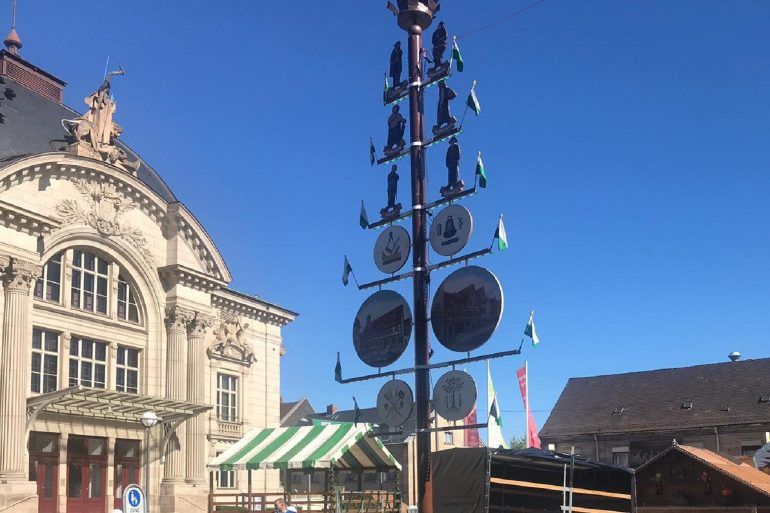
4. Fürth has got a twin theatre in the Ukraine

Photo owned by Alena Rögner

The Viennese architects who designed our theatre building were originally commissioned to build a theatre in Chernivtsi (now Ukraine). However, the construction was postponed due to funding problems. In the mean time, the architects used the plans for Fürth’s municipal theatre. Between 1904 and 1905, the construction was also executed in Chernivtsi. So it happened that the two city theatres look almost identical.


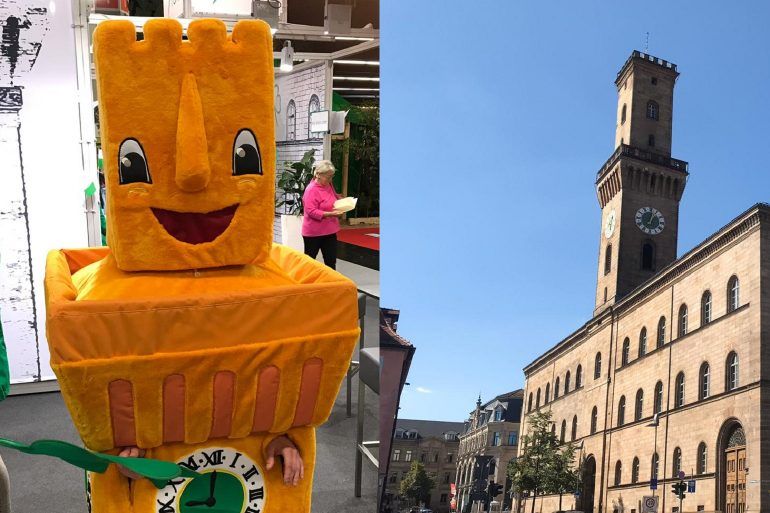
5. The tower of our town hall is Fürth Council’s new mascot

Photo owned by Hannes Link/Alena Rögner

Yeah that’s right. Since this tower is the most crucial landmark of our hometown it represents the common public identity of Fürth and its town council. The mascot supports our tourism and recruitment team at trade fairs like the Consumenta (Germany’s largest goods fair) and other marketing events.


6. Wee hippo on the run

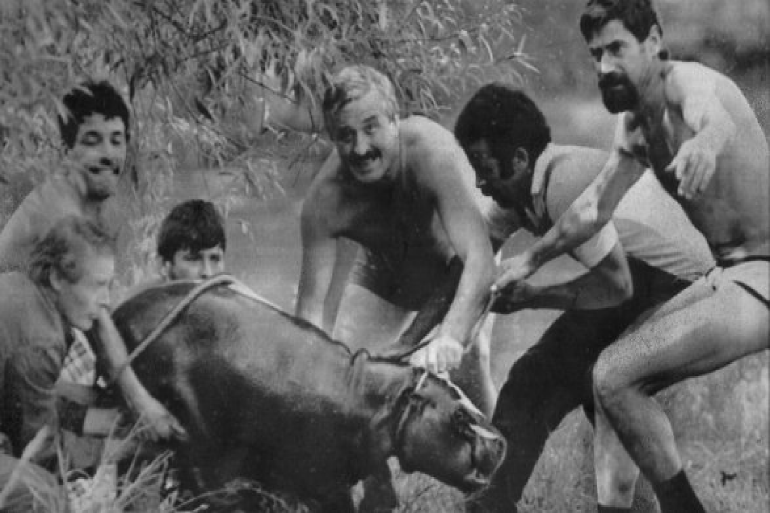
In the 90s, the Swiss circus Fliegenpilz (German for “toadstool“) happened to perform in Fürth. Due to carelessness of an animal keeper a pygmy hippo called Elsbeth escaped to the nearby River Pegnitz. All attempts to recapture the way too nimble Elsbeth failed, and the fire brigade were alerted hastily by the circus. But it was only after one long week that the wee hippopotamus was recaptured. All the trouble attracted hundreds of onlookers and nationwide media coverage. In Elsbeth’s honour a bronze statue of her was built by a local artist.

Find out more about Mairie, Fürth and her stay in Paisley

My name is Mairie Schwarz. As a student of Paisley’s twin town I’ve been living in Fürth since I moved from my parents home in July 2017. Paisley and Fürth have been twin towns since 1969 – and they have so many amazing similarities.

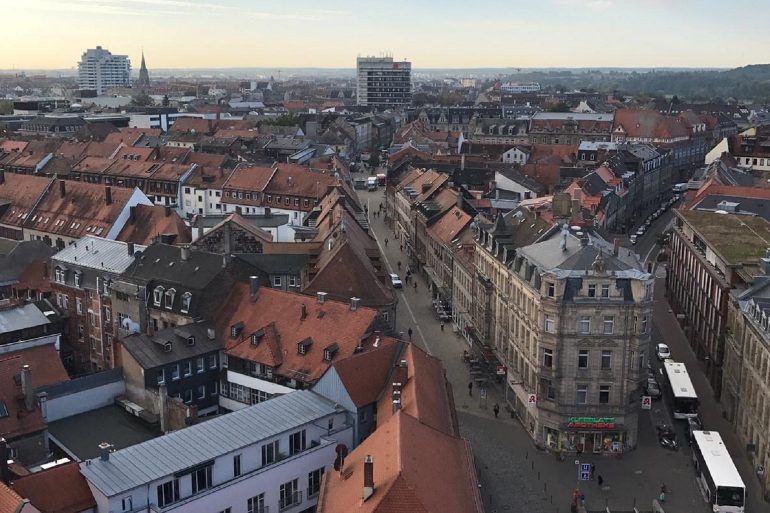
At first I thought it would be a boring town with a lot of fine old buildings which facades are now peeling away. The city adjoins the large city of Nuremberg, just as Paisley is very near to Glasgow.

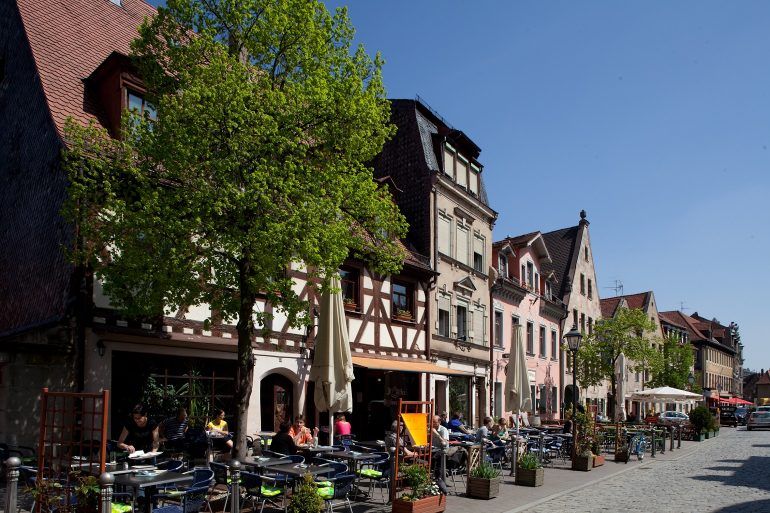
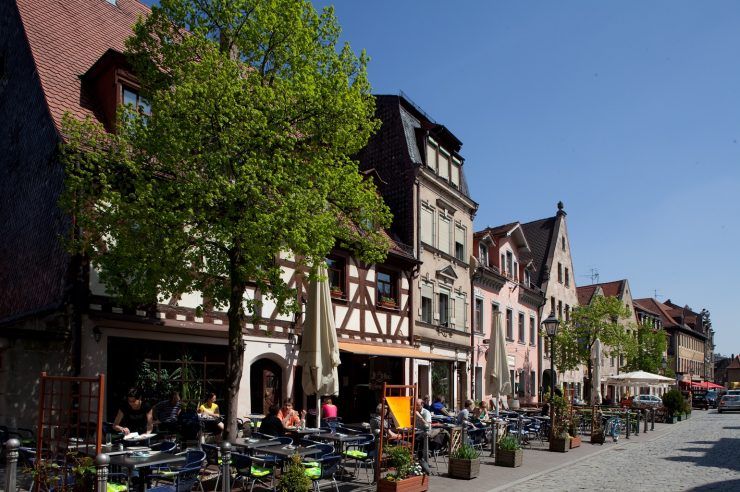
Surprisingly, I discovered that there is a lot more to Fürth than I first thought. Now you can witness a lot of new business emerging in its town centre and the wider region. Moreover, there are many stunning sights waiting for you to explore. Similar to Paisley, Fürth has a outstanding historic heritage and understated beauty – and wide range of restaurants to delight every taste. Whether you go on a rustic pub crawl in winter or soak up the beer garden atmosphere on Gustavstraße in Summer – you’re in for a treat.

Today, I can tell you that I really love living in this absolutely beautiful city, because I fell in love with its unique charm and the quirkiness of the city’s people. And that’s why I want to show you some of its nicest places and their similarities to Paisley’s gems in this blog.


Architecture and Historical Buildings

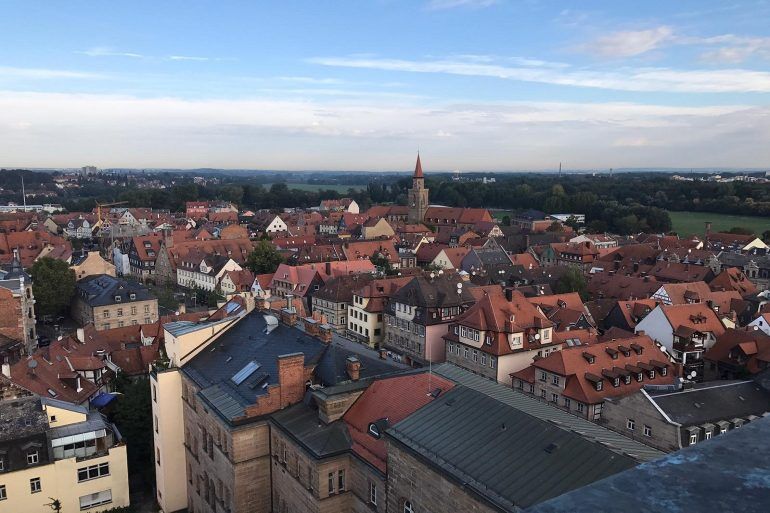
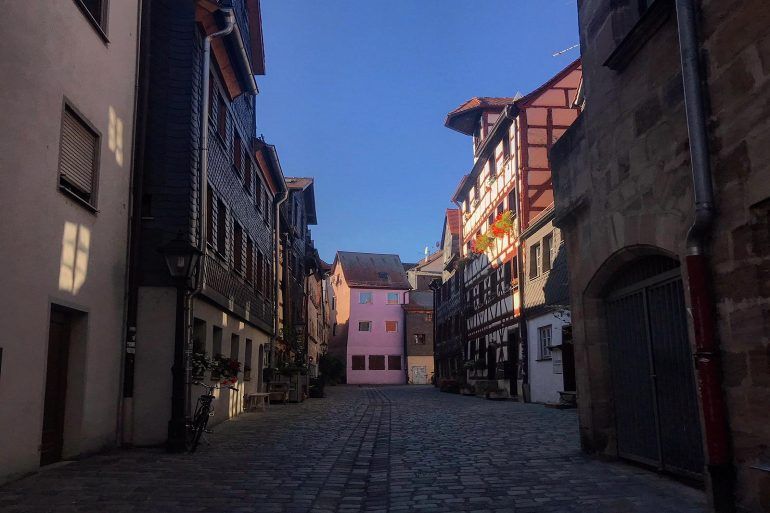
Fürth is more than a thousand years old and blessed with over 2000 historical buildings – that’s more than any other Bavarian city in proportion to its inhabitants. Paisley is also well known for its rich built heritage and has more listed buildings of anywhere in Scotland outside of Edinburgh.

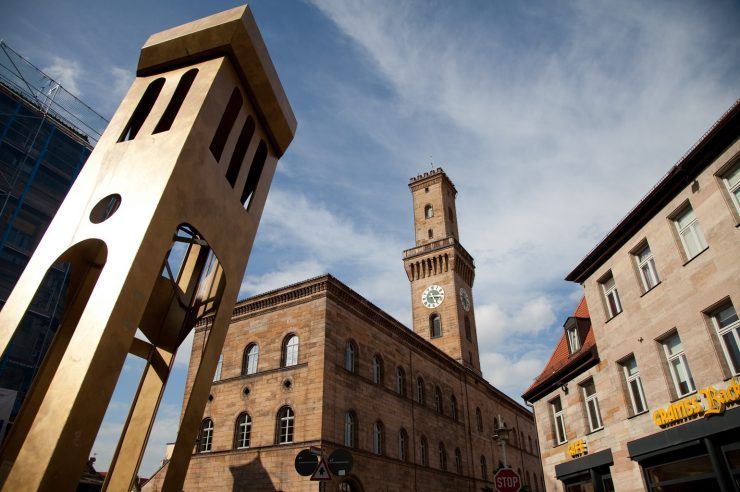
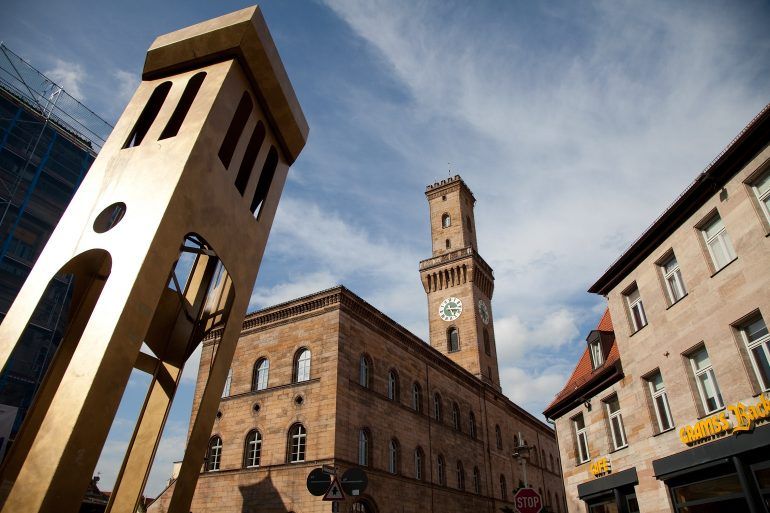
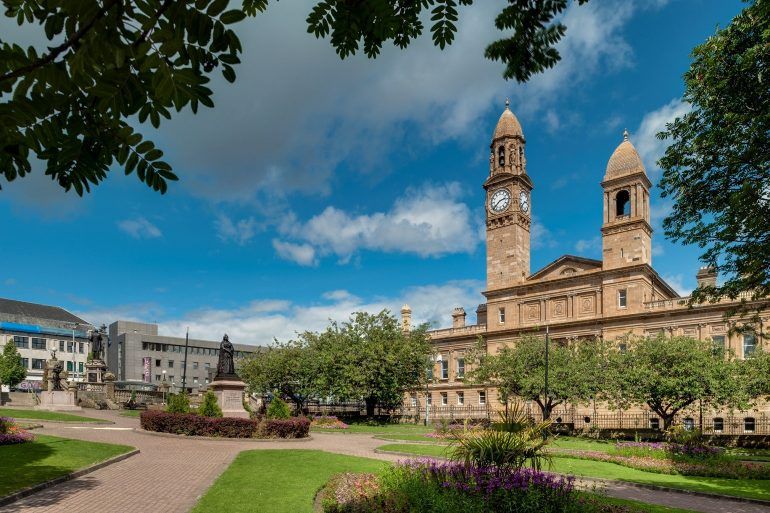
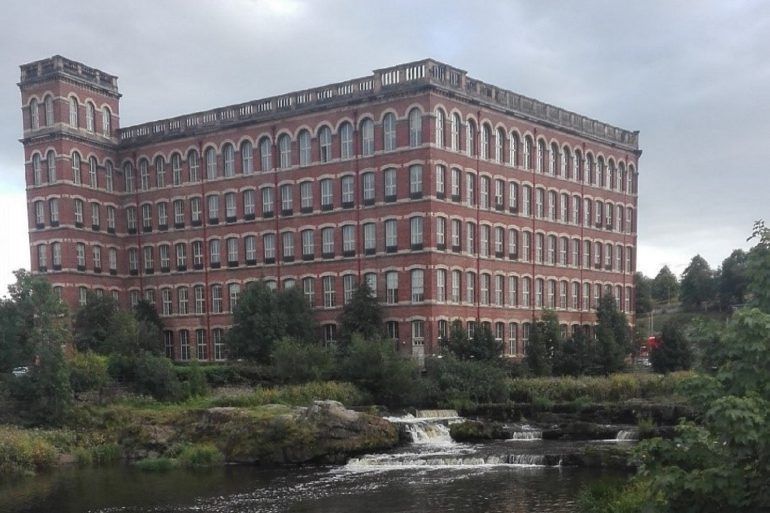
In my first Blog I already showed you a picture of our Town Hall – a monumental building which was cunstructed between 1840 and 1850 in the neo-classical style. Its 180 feet tower is the landmark of the city of Fürth. With a little touch of imagination it could remind you of a mixture of the Anchor Mill and the clock tower of the Paisley Town Hall, don’t you think?


Fürth Town Hall – Photo owned by the City of Fürth


Paisley Town Hall


Paisley’s Anchor Mill

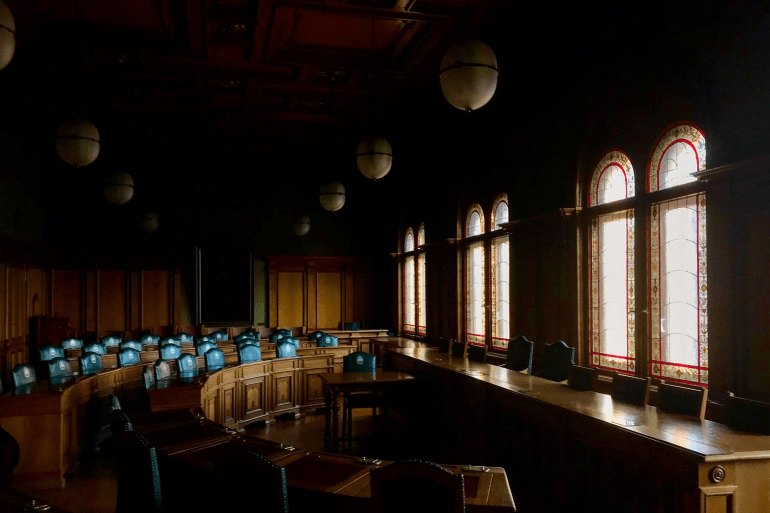
Please have a look inside our Council Chamber. It has been designed and furnished with a loving attention to detail.

Fürth Council Chambers – Photo owned by Alena Rögner


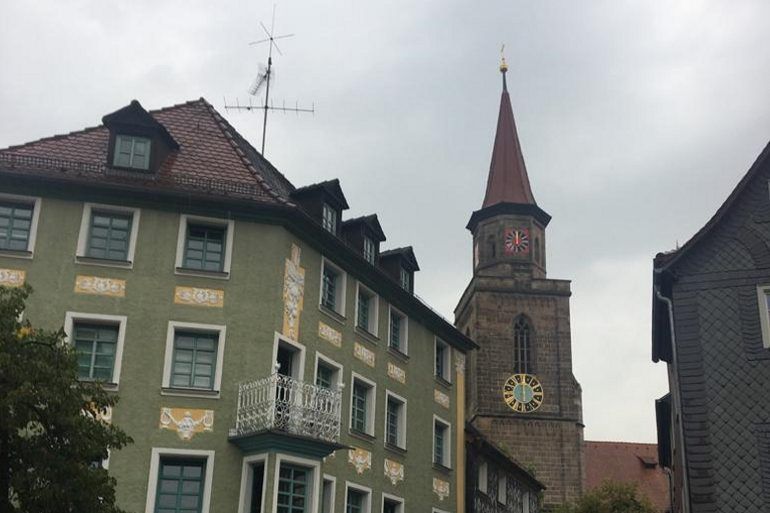
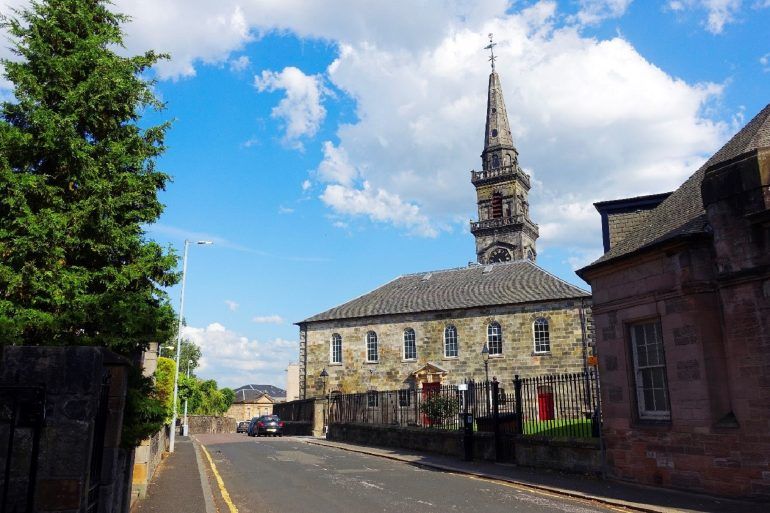
Next I want to show a picture of our beautiful St Michael’s Church which is the oldest edifice in Fürth. The beginnings of this fortified church date back to 1100. The small market town, St Michael’s is just a simple, unadorned village church. The tower with its west portal, the chancel and the south entrance are from the gothic period. The interior is in 19th century neo-gothic style. However, it strongly reminds me of the Oakshaw Trinity Church – the highest point of Paisley’s townscape.


St Michael’s Church Fürth – Photo owned by Louisa Mahon


Paisley’s Oakshaw Trinity Church


Aside from that the beautiful architecture at Paisley’s High Street  – for example the Liberal Club designed by James Donald in 1886 – has got common features to Fürth’s High Street called Schwabacher Straße, but also to Fürth’s Hornschuchpromenade/Königswarterstraße. This outstanding promenade is unique in Fürth. From 1883 to 1904, prestigious stately homes with rich sandstone ornaments were built for Fürth’s upper classes. At this time, the green central reservation was used by the Ludwig railway – living close the the railway tracks was considered fashionable. Fun Fact: The first German railway “Adler” (eagle) took to the tracks between Nuremberg and Fürth in 1835.

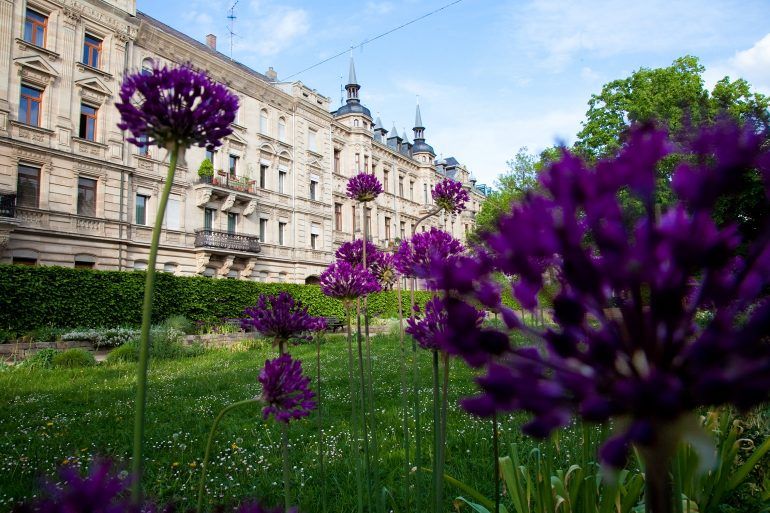
Fürth’s Hornschuchpromenade/Königswarterstraße – Photo by the City of Fürth

Fürth’s Schwabacher Straße – Photo owned by the City of Fürth


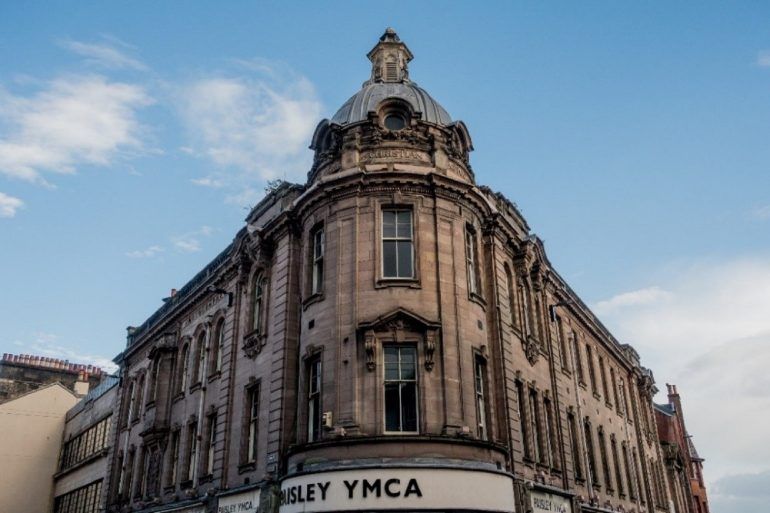
Paisley Y.M.C.A.


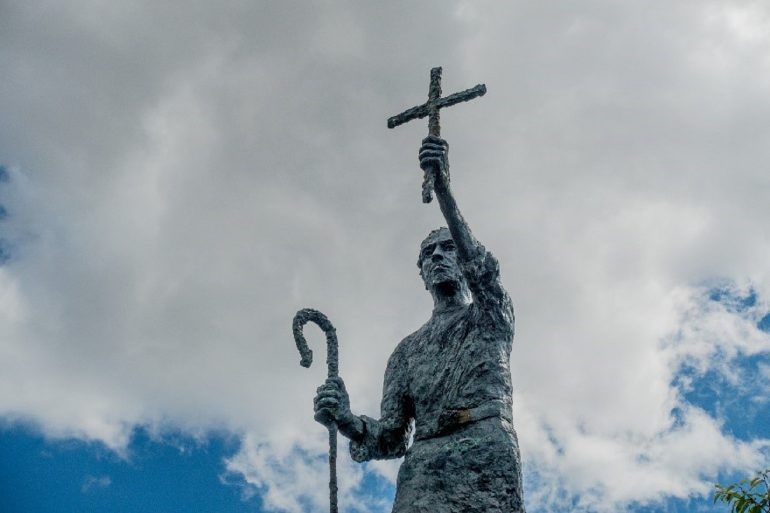
St Mirin Statue Paisley


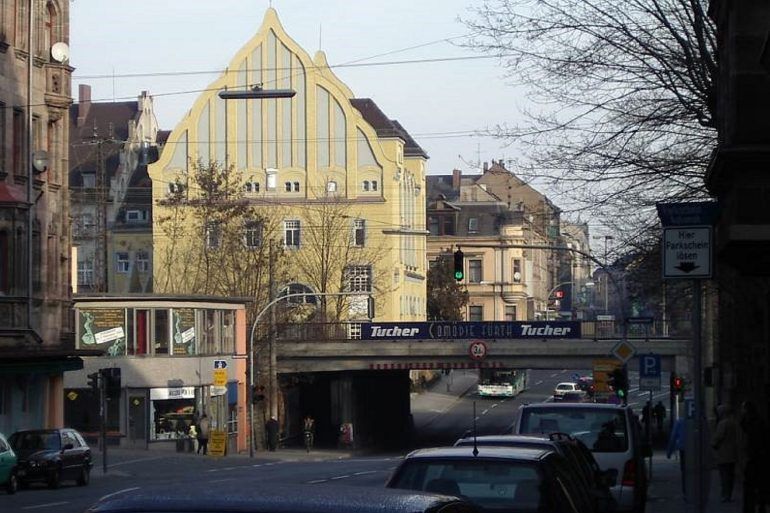
Fürth is a wellkown place for Franconian Comedy, too. This former institute of adult education – built in 1904 – may remind you of Paisley’s St. Matthew’s church or the Paisley Arts Centre, because they are also places for indoor theatre, music and comedy events. Today, the renovated art nouveau buildings home to the playhouse, restaurant and scene bistro of Fürth “Comödie” and more resently to the Grüner brewery. Its unique in-house productions attract attention far beyond the city borders.


Comödie Fürth


Paisley Art Centre


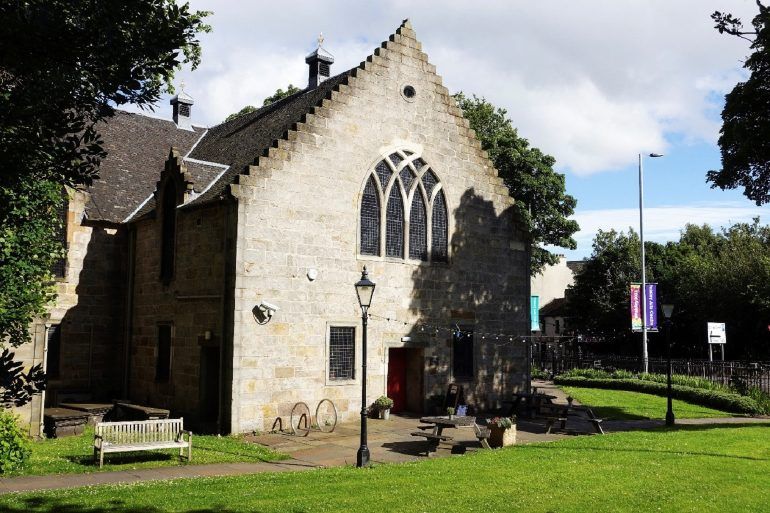
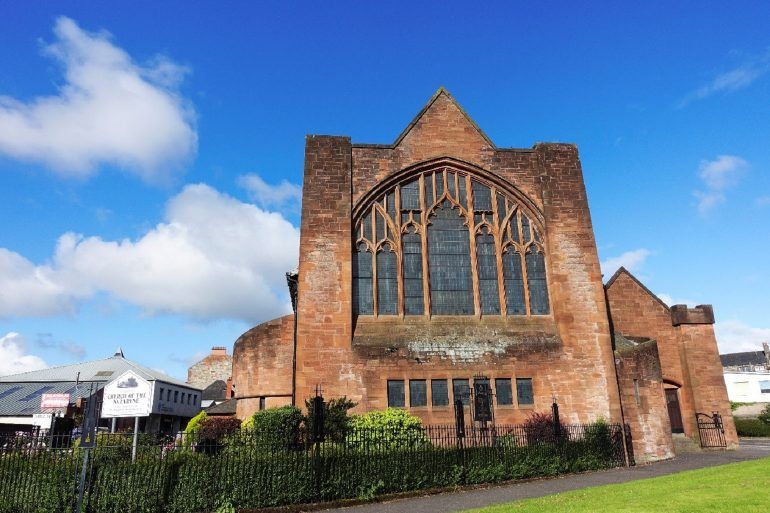
St Matthew’s Church Paisley


Rivers and the City

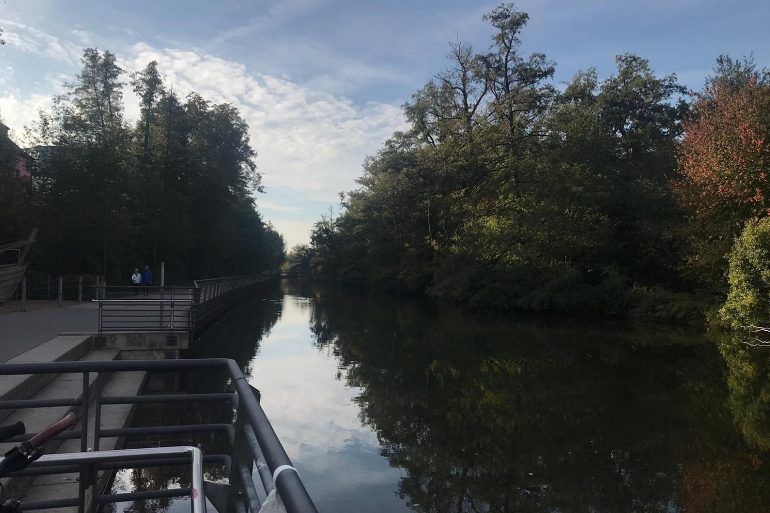
I live in the the south-end of Fürth and it’s really a nice place to settle down, because my flat is located right next to the river Rednitz, where you can find traces of the old river bath. It joins with my favourite home river Pegnitz which comes from the bigger city Nueremberg to form the important Franconian River Regnitz to the northwest of the old town. The Main-Danube Canal is to the west of the town. You can definetly compare these waters to the White Cart River and the the Forth and Clyde Canal.

River Rednitz in Fürth – Photo owned by Alena Rögner


White Cart River in Paisley


Events and Parades

It’s hard to compare a German beer festival to a specific fesitval in Scotland, such as our town’s festival “Michaeliskirchweih” – which is celebrated each October for almost 900 years. But I think Paisley’s Food and Drink Festival and Weave and Sma’ Shot Day celebrations are as close as it gets to our grand steet festival, with its charming mixture of market and funfair. It always comes with a big parade supported by local groups. Similar to Paisley, there are many other events you can go to as well, such as the New Orleans Music Festival, the literature festival LESEN!, classic open air events, two Christmas markets and the “Grafflmarkt” (flea market).

Kerwa Fireworks -Photo owned by www.michaelis-kirchweih.de


Paisley’s Food and Drink Festival

If you’re interested to learn more about your sister town Fürth, please check out Fürth impressions or Cloverleaf impressions. Thanks a lot for reading!

Find out more about Mairie, Fürth and her stay in Paisley

Many urban areas would love to have a measure of the pedigree that this post-industrial conurbation boasts. Aside from its textile legacy, and illustrious denizens, Paisley has an incredible architectural heritage, from the 12th-Century Abbey, with its glorious Edward Burne-Jones windows, to its Victorian Observatory, to the stunning Art Deco Russell Institute.

Gemma Fullham
Reporter, Irish Independent

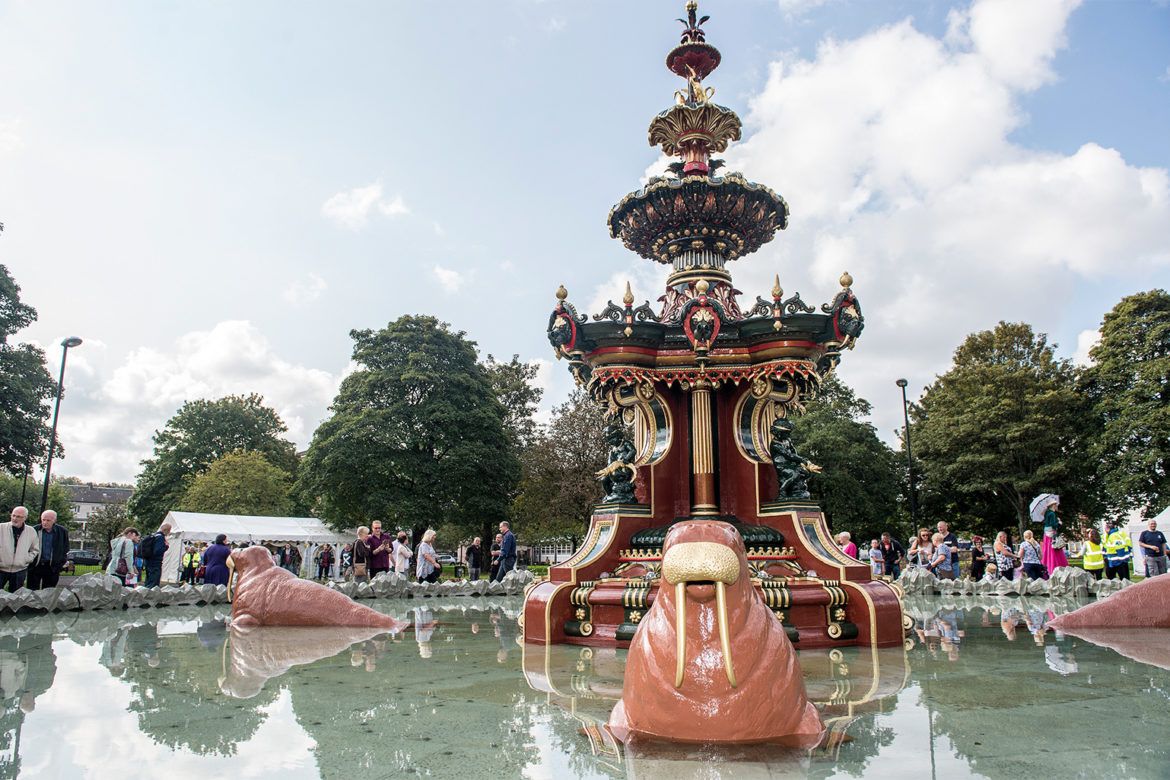
Paisley’s spectacular Grand Fountain has inspired this fab short film from the local STAR Project.

The fountain was restored to its full glory in 2014 and has won loads of awards since. It’s also won a place in the hearts of local people over the years, and this film explores why, here in Paisley, ‘we are the walrus!’.

We don’t need to say too much more – just watch and enjoy…

We are the Walrus from mandy mcintosh on Vimeo.

Tell me more about the Grand Fountain

I remember sunbathing and playing in the Fountain Gardens as a young kid.

Clare McFadyen
What's Our Story?

It’s a goal every fan of the Scottish national football team remembers fondly – regardless of how old you are.

Whether you joined the Tartan Army on the road to Argentina, supported the team from home or you weren’t even born yet, the footage of Archie Gemmill’s goal against the Netherlands at the 1978 World Cup is engrained in the memory of every Scotland fan.

The 2018 World Cup marks 40 years since THAT wonderful goal in the 3-2 victory over the Netherlands in Mendoza.

The sight of the Paisley-born midfielder gliding past three defenders before sprinting into the box and curling a left footed strike past Dutch goalkeeper Jan Jongbloed is bound to leave you grinning from ear to ear.

While the tournament may have ended in disappointment for the Scots – who needed to win by three clear goals to progress from the group stages – Gemmill’s goal is widely regarded as one of the greatest ever scored at the World Cup.

It was a sublime moment in an illustrious career which saw Gemmill lift the European Cup and three English league titles.

During his career, Gemmill would play for hometown club St Mirren, Preston North End, Derby County, Nottingham Forest, Birmingham City, Jacksonville Tea Men and Wigan Athletic, before a second spell at Derby.

The midfielder collected 47 caps for his country, scoring eight goals and captaining the side 22 times.

As the 2018 World Cup gets underway in Russia, look back on Gemmill’s stunning strike from Argentina ‘78 with the video above.

Then see the goal recreated using LEGO and stop-motion animation by local filmmaker Morgan Spence below. The talented teenager created the video in support of Paisley’s bid for UK City of Culture 2021.

I love being in England and when people say 'Rangers or Celtic?' I say back 'St Mirren!

Dave McHendry
What's Our Story?

Our very own award-winning photographer Gary Chittick is back with some truly stunning shots showcasing the very best of Renfrewshire in summertime.

Well here we are almost at summer. The weather for the May bank holiday weekend looks decent and with the long days, it’s a great time to get out and about and see the area or get yourself to one of the many events happening around Renfrewshire.

It’s a terrific time of year for photography with all of the spring new-borns growing up, seasonal spring and summer birds coming home, cherry blossom on the trees and bluebells on the ground. The weather usually improves too, so it’s a great time to get outside and enjoy Renfrewshire.

I thought I’d share a few images from Renfrewshire from around this time of year and I hope you enjoy them.

Sunrise

Sunrise

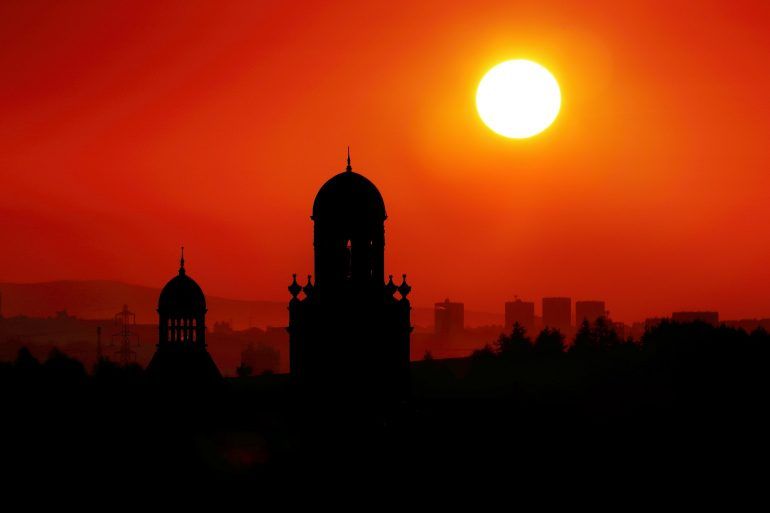
With the longer days, it means that sunrise gets earlier and earlier until we reach the summer solstice on Thursday 21 June when the sun will rise at 4:31am and set at 10:06pm. Unfortunately, this means that the alarm call for sunrise is at a ridiculous time (for me anyway) although the benefit is quiet roads and near perfect silence apart from the wonderful dawn chorus of birds.

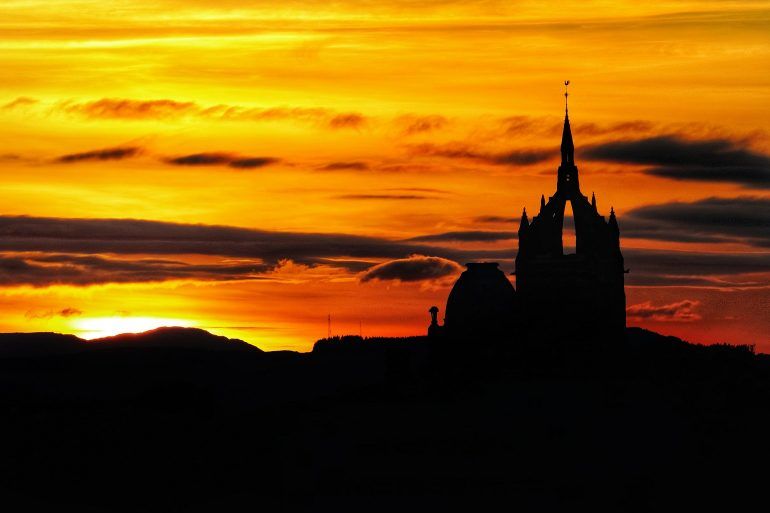
This image is taken from Paisley’s Saucelhill Park looking North East over the Abbey Mill Business Centre about 15 minutes after sunrise. Seeing the sun creep over the horizon was a fantastic sight and the horizon was ablaze with oranges and reds. It’s very peaceful watching a sunrise or sunset and if you can get yourself out of bed, I highly recommend it!

British Pipe Band Championships

British Pipe Band Championships

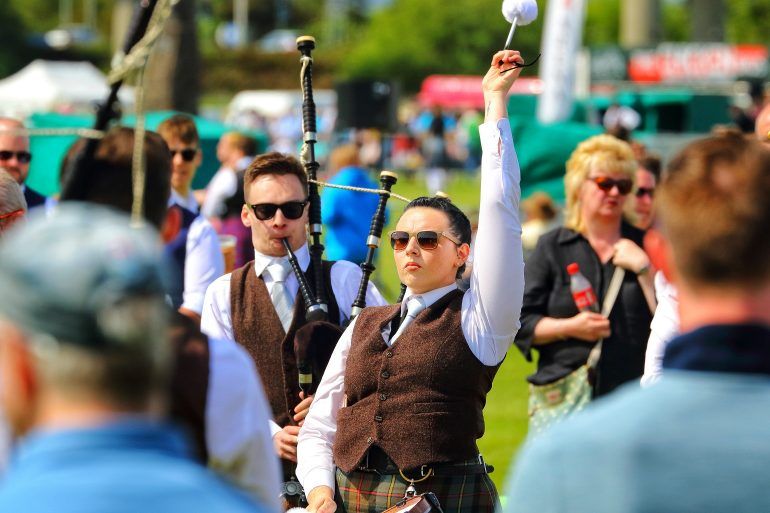
After managing to get back to bed for a couple of hours after sunrise, I wanted to make sure I got down and experience the British Pipe Band Championships at St James Playing Fields in Paisley. This was the third year the event has been held in Paisley and the great news is there is at least another three years to experience this fantastic event in the town. My uncle played in the Texas Caledonia Pipe Band and competed at the Worlds in Glasgow, so I’ve always had a soft spot for pipe bands. A terrific event, glorious weather, lots of great music, talented performers and thousands of people enjoying what Paisley has to offer.

I’ve chosen an image that I think shows the concentration, professionalism and fun atmosphere at the event. A great day out for the family!

Wildlife on Gleniffer Braes

Wildlife Gleniffer Braes

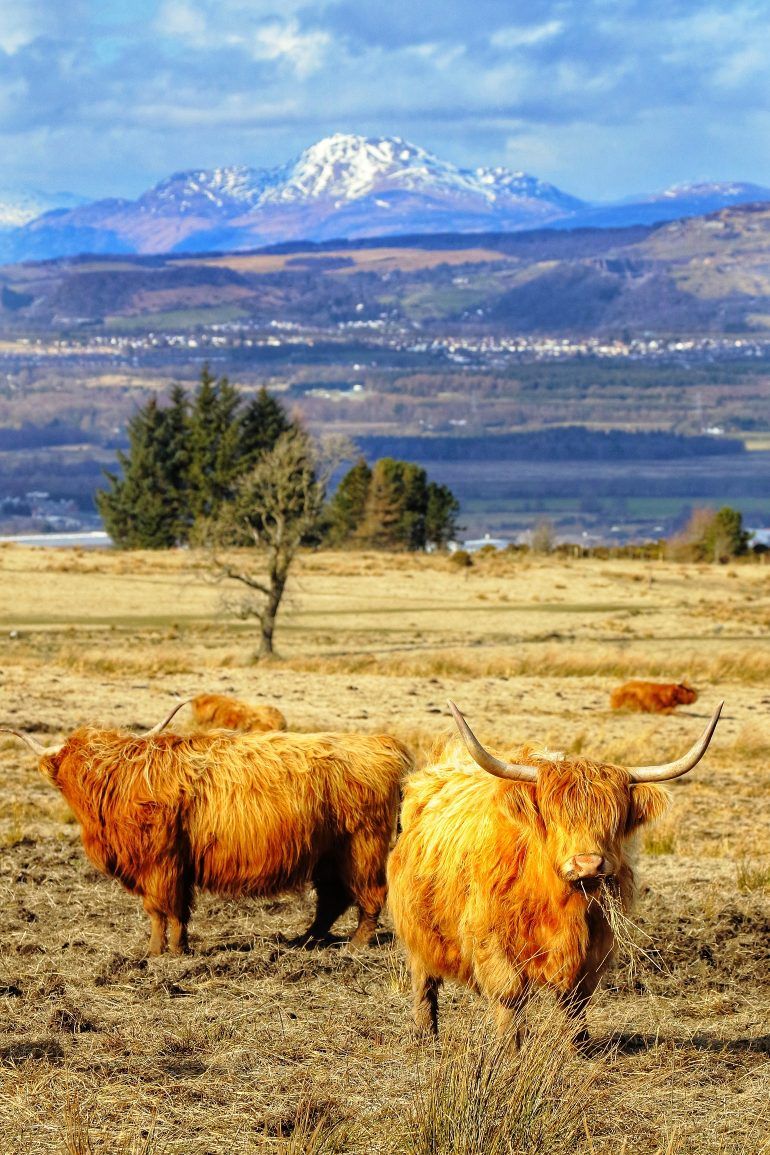
Before the weather changed recently, we still had some snow visible on the hills of Loch Lomond and beyond and this made an interesting background for the famous highland cattle on the Gleniffer Braes. They were clearly not minding the weather and wondering what had happened to Spring! The cattle have been grazing there and playing their part in biodiversity for nearly 60 years. They are as much a fixture in the town as many of the familiar landmarks and legends. The Gleniffer Braes are a fantastic place for walks and to take in the spectacular views over Paisley, Renfrewshire and beyond.

Noctilucent Clouds

Noctilucent Clouds

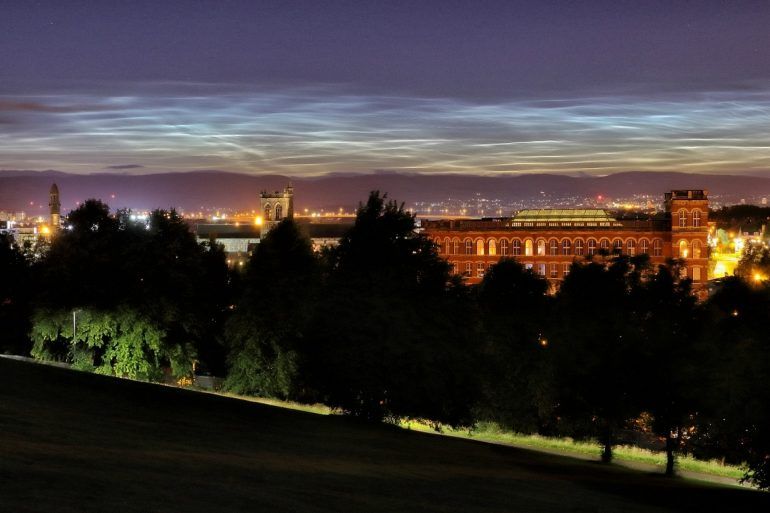
Something that you may be able to see from Renfrewshire between late May and early July are noctilucent (also known as Polar Mesospheric or “night shining”) clouds. These are a unique type of bright clouds that are found at around 250,000ft. They are most commonly observed around 1-2 hours after sunset or before sunrise in the North, although they can extend East and West.

The most common form I’ve watched from Renfrewshire have long, delicate, ripple and wave type structures which you can see in the image I’ve chosen from last year’s season. They are a mesmerising and fantastic sight and you might well have seen them without knowing what they were.

Look out for these now as the “season” for them is just starting!

Sunset

Sunset

It feels right to end with a sunset and Paisley and Renfrewshire have all manner of viewpoints to watch the sun go down. You have probably seen some terrific images taken from Barshaw Park, the Robertson Car Park on the Gleniffer Braes, the Erskine Bridge and Clyde Muirshiel Regional Park to name a few but I’ve chosen one from Saucelhill Park as a recent favourite.

The views over the town from here are terrific in almost all directions and it’s a really great spot from which to appreciate the architecture and skyline of the town. This image was taken looking North West over the skyline towards Loch Lomond and Argyll. Just like the sunrise image from the same location, I highly recommend watching the sun set over the town from here.


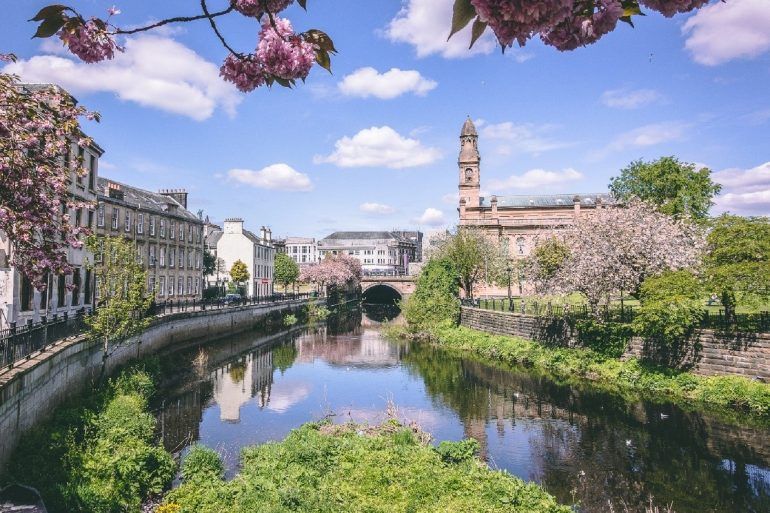
Paisley has an understated beauty. Paisley is the confident, attractive character in the room that doesn’t need to shout about it but still lets you know it’s there. Paisley is a great walking town and you are always likely to discover something new in the streets whether you are exploring for five minutes or five hours.

Gary Chittick
Photographer